ABS: tough, but keep it indoors

ABS is what you pick when a part gets dropped, screwed into or left somewhere warm — and, of the tough plastics on our shelf, the one that quietly dies in a window.
The short answer
Indoors and under stress — ABS. The same part outdoors — ASA. Neither, if what you actually want is cheap and quick.
What it is good at
Impact. ABS dents and bends where PLA cracks. Enclosures that get dropped, clips that get flexed open a hundred times, handles that get yanked — this is the material's whole reason for existing.
Heat. It holds its shape to around 90 °C. That covers a closed car in July, a lamp housing, a bracket sitting on a warm electronics case — all the places PLA gives up and PETG is borderline.
Assembly. Heat-set brass inserts sink into ABS beautifully, and acetone welds it: a part split in two to fit the plate comes back as one piece, not as two pieces with glue between them.
Finish. ABS — with ASA, its outdoor cousin — is the one material family here that can be vapour-smoothed. Acetone vapour melts the outer skin just enough for the layer lines to flow into each other, and what comes out looks closer to injection moulding than to printing.
What it is bad at
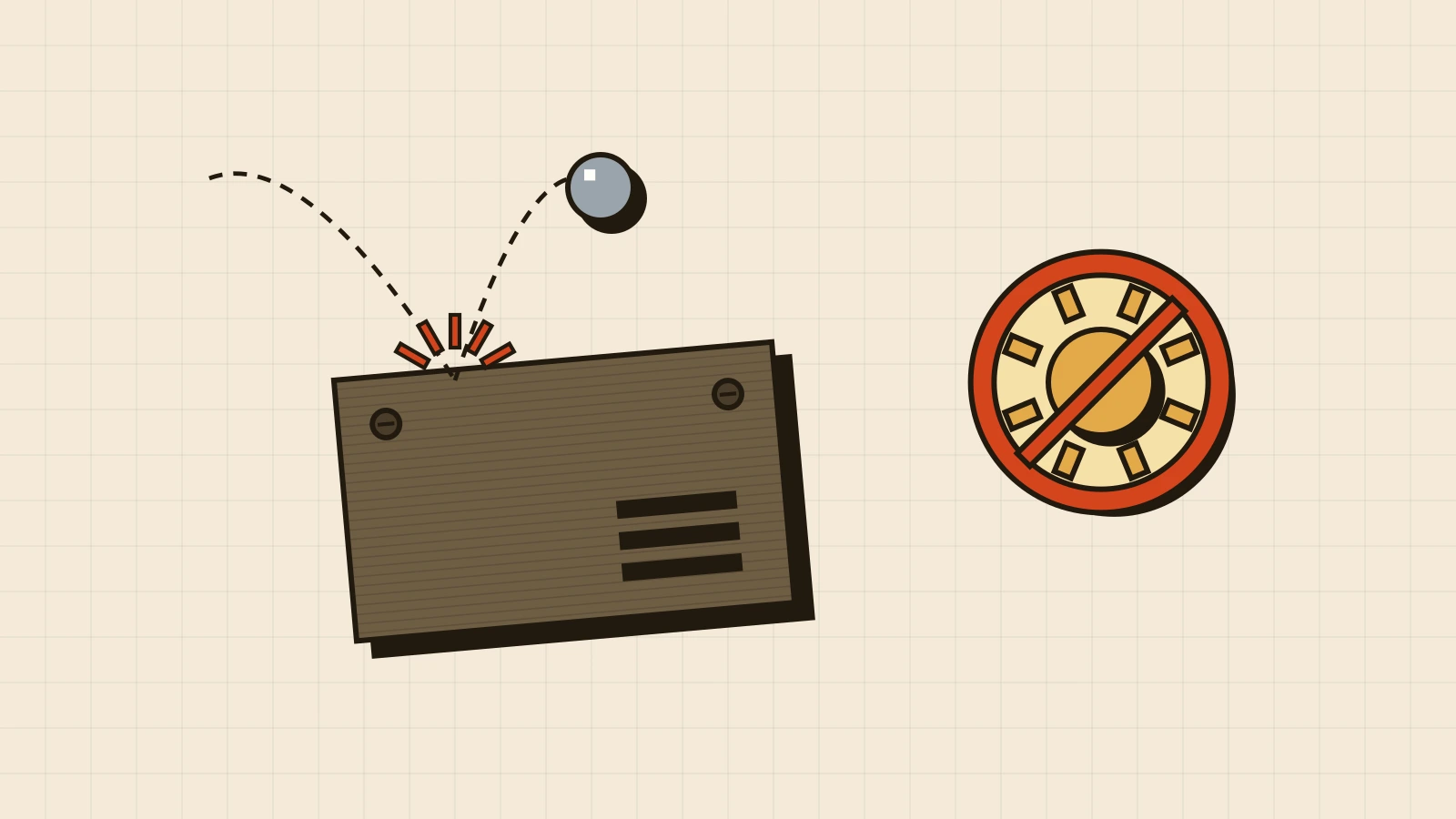
Sunlight. This is the one that matters. UV breaks ABS down: the colour fades, the surface chalks, and the part turns brittle. A season on a balcony is enough to see it happening; after two, a clip snaps in your fingers. Everything else about ABS is a trade-off. This one is a disqualification — and it is exactly why ASA exists.
Shrinking. ABS contracts as it cools, so wide flat parts pull off the plate and tall ones split at the corners unless the print stays warm the whole way. We run it enclosed, chamber warm and fans low. You see that as a slightly longer lead time rather than as a problem.
Price. Above PLA and PETG, below the engineering plastics.
| PLA | PETG | ABS | |
|---|---|---|---|
| Impact | cracks | bends | bends, and takes more |
| Service temperature | ~55 °C | ~75 °C | ~90 °C |
| Sunlight | yellows | holds up | fades and embrittles |
| Printing | easiest | some tuning | needs an enclosure |
| Finishing | sanding | sanding | sanding, or vapour-smoothed |
Why it prints in a closed box
Warping is only half the reason for the enclosure. The other half is what ABS gives off while it is molten.
Desktop printers running ABS release ultrafine particles — smaller than 100 nanometres, small enough to stay airborne and be inhaled — along with volatile organic compounds, of which styrene is the one that characterises ABS. This is not folklore; it is the finding of a decade of measurements, and the NIOSH bulletin on 3D printer emissions exists because of it.
What the research does not give is a single number to plan around. Reported particle emission rates for ABS across published studies span from roughly 2.4 × 10⁸ to 1.5 × 10¹² particles per minute — four orders of magnitude, depending on printer, nozzle temperature and spool. That spread is itself the useful finding: you cannot look up your exposure, so the control has to be the setup rather than the arithmetic. Enclosed machine, air filtered or vented outside, and nobody sitting beside it for eight hours.
One more thing worth knowing, because it is the part that reaches a customer rather than a workshop: a finished ABS part keeps off-gassing styrene for a while after it comes off the plate. That is the faint new-plastic smell on a fresh part, and it fades. A part that has been through finishing and packing has done most of it already.
Acetone, properly
ABS — and ASA, which shares its chemistry here — is the only plastic on our shelf that dissolves in something ordinary, and that single property buys two things nothing else here can do.
It welds. A part too tall for the plate can be split, printed in two, and rejoined with acetone. The solvent softens both faces, the polymer chains mingle, and what sets is one piece of ABS — not two pieces with a third material between them. A glued PLA joint is the weakest line in the part; an acetone joint in ABS usually is not.
It smooths. Suspended over acetone vapour, the outer skin of the part liquefies just enough for the layer lines to flow together, then hardens again. What comes out reads as moulded rather than printed, and it is genuinely waterproof in a way a layered surface is not.
Both come at a cost, and it is worth knowing before you ask for it: vapour smoothing rounds fine detail, softens sharp edges and takes a few hundredths off the outside dimensions. Lettering below about 1 mm tends to blur. Anything with a tolerance on it should be masked or left alone. And acetone is flammable and needs real ventilation — this is a workshop operation, not a kitchen one.
Designing for it
- Expect roughly half a percent of shrink: a 100 mm part lands a few tenths under. If a fit matters, say so with the order and we compensate for it in the file.
- Large flat bottoms are where warping starts. A small chamfer at the base and rounded corners instead of square ones both help more than they look like they should.
- Split tall thin parts deliberately rather than fighting the warp, and let us bond them with acetone — that joint is a weld, not a glue line.
- Inserts, not printed threads. As with every plastic here.
Tip from the workshop. If a fit matters, say so with the order. ABS lands about half a percent under size, and we would rather compensate for it in the file than have you discover it in your hands.
When to pick something else
If the part lives outside, ASA gives you the same toughness without the UV problem. If it only has to be tough and never hot, PETG prints easier and costs less. And if it has to hold past 100 °C, this is PC territory — tell us what it sits next to and we will say which.
Common questions
Is it safe to print ABS at home? It is done all the time, and the sensible precautions are not complicated: an enclosed printer, the air either filtered or going outside, and the machine somewhere nobody sleeps or sits all day. What you should not do is run it open on a desk in a closed room, which is where most of the unpleasant reports come from. NIOSH's guidance is the same — contain it, ventilate it, keep your distance while it runs.
Will the part smell when it arrives? Faintly, for a while. That is residual styrene leaving the plastic, and it fades over days rather than months. It is stronger on a thick part than a thin one and stronger straight out of the machine than after finishing.
Why did my ABS print split across the middle? Almost always the chamber cooled. ABS shrinks as it sets, and if the layer below has gone cold and rigid before the next one lands, the new layer pulls against it and the bond loses. Warmer chamber, no draught, part cooling down.
Can ABS be painted? Better than most. It sands without clogging, takes a plastic primer readily, and its surface can be prepared with acetone instead of paper. It is the material to choose if the finish matters more than the colour of the spool.
Is ABS recyclable? In principle yes, in practice rarely at kerbside — it is usually sorted as "other", and printed parts are small, mixed-colour and often contaminated with supports. The honest answer is that the useful economy with ABS is a part that lasts a decade, not one that gets recycled in a year.